Aerosol Contract Manufacturing: How to Choose the Right Partner
Aerosol Contract Manufacturing: How to Choose the Right Partner for Your Brand
Whether you’re a startup founder with a breakthrough sunscreen formula or a seasoned brand manager looking to expand your product line, one decision will shape the outcome more than almost any other: who manufactures your aerosol product.
Aerosol contract manufacturing is the process of outsourcing the formulation, filling, packaging, and quality control of aerosol products to a specialized third-party facility. It’s how brands of every size, from indie personal care labels to Fortune 500 consumer goods companies, bring pressurized products to market efficiently, cost-effectively, and in compliance with complex regulatory requirements.
This guide covers everything you need to know: what aerosol contract manufacturing includes, what to look for in a partner, how modern bag-on-valve technology fits in, and how to evaluate your options so you make the right call the first time.
What Is Aerosol Contract Manufacturing?
Aerosol contract manufacturing refers to a business arrangement where a brand or product owner partners with a certified filling facility to produce aerosol goods on their behalf. The contract manufacturer handles the technical side (equipment, compliance, filling lines, and often formulation) while the brand owner maintains control of their product identity, labeling, and go-to-market strategy.
In practice, this arrangement can cover any combination of:
- Product formulation development or working with a customer-supplied formula
- Component sourcing: cans, valves, actuators, propellants, and bags (for BOV systems)
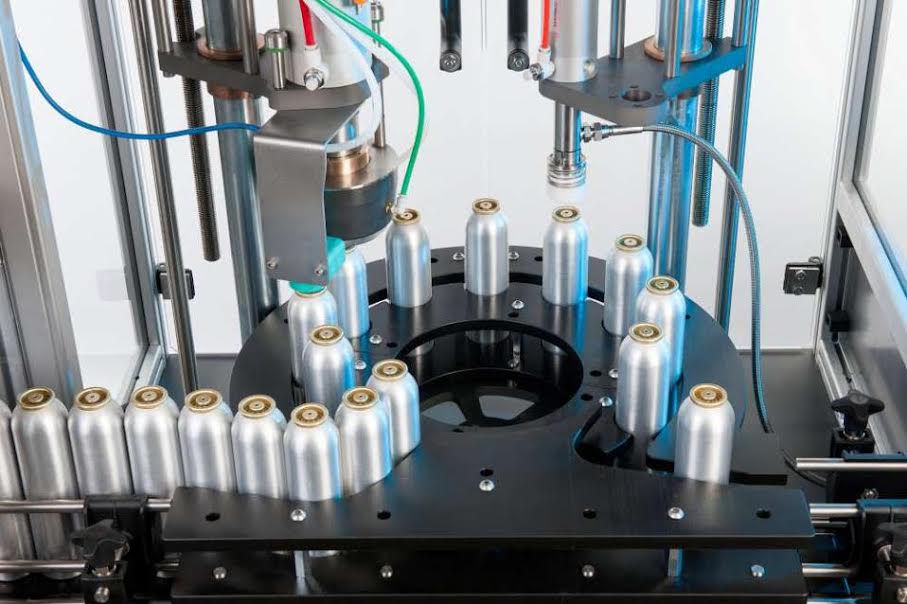
- Aerosol filling and crimping on specialized, certified equipment
- Quality control and regulatory compliance testing
- Labeling, lot-coding, tamper-evident sealing, and shrink sleeve application
- Finished goods packaging for retail or distribution
Put simply, a good aerosol contract manufacturer turns your concept into a shelf-ready product and takes on the complexity so your team doesn’t have to.

Why Brands Choose Aerosol Contract Manufacturing Over In-House Production
Building and operating your own aerosol filling line is a significant capital investment. Beyond the equipment costs, you’re looking at regulatory registrations (FDA, EPA), specialized safety infrastructure, trained operators, propellant storage permits, and ongoing compliance management. For most brands, the math simply doesn’t work, especially in early or mid-stage growth.
Here’s why contract manufacturing consistently wins:
Lower Capital Requirements
Contract manufacturing converts a multi-million dollar capital expenditure into a per-unit cost of goods. You pay for production, not infrastructure, freeing capital for marketing, R&D, and distribution.
Faster Time to Market
An experienced aerosol contract manufacturer already has validated equipment, certified processes, and supplier relationships in place. That means your product can move from formulation approval to finished goods in weeks rather than months.
Built-In Regulatory Expertise
Aerosol products are regulated at multiple levels: by the FDA for food and personal care, the EPA for pesticides and repellents, and OSHA for flammable propellant handling. A certified contract filler already operates within these frameworks. Their compliance infrastructure becomes yours by extension.
Scalability Without Risk
Whether you need a short introductory run of a few thousand units or a sustained supply of hundreds of thousands, a contract manufacturer can flex to your volume without you holding idle equipment during slow periods.
Access to Specialized Technology
Technologies like bag-on-valve (BOV) filling require highly specialized equipment and expertise that few brands could justify owning outright. Partnering with a dedicated BOV contract filler gives you access to this premium capability at a fraction of the ownership cost.
What Products Can Be Made Through Aerosol Contract Manufacturing?
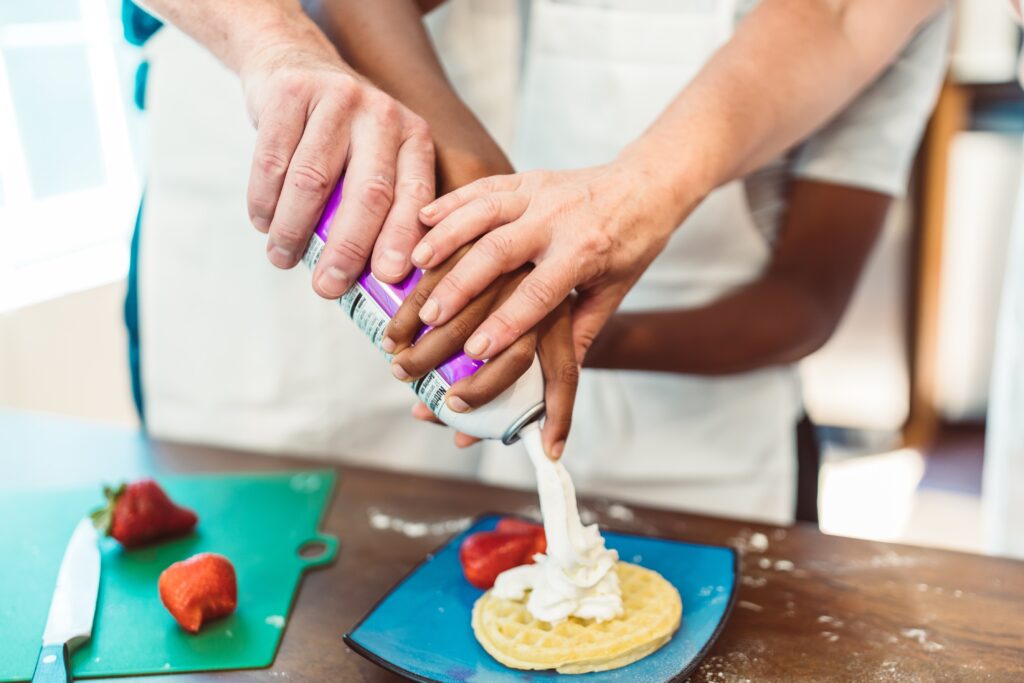
The scope of aerosol contract manufacturing is broader than most people realize. Modern contract fillers can handle liquid, gel, foam, and viscous formulations across a wide range of product categories:
Personal Care & Cosmetics
- Sunscreens and SPF body sprays
- Deodorants and antiperspirants
- Shaving gels and foams
- Hair care (dry shampoo, texturizing spray, root touch-up)
- Facial mists, toners, and hydrating sprays
- Self-tanners and bronzing sprays
- Lotions, gels, and body creams in aerosol format
Food & Culinary
- Cooking oil sprays (olive, avocado, coconut, canola)
- Baking and pan release sprays
- Butter and flavored oil sprays
- Syrups, dressings, and condiment sprays
Household & Industrial
- Air fresheners and odor eliminators
- Multi-purpose cleaners and degreasers
- Fabric protectors and spot removers
- Insect repellents
- Essential oil sprays and aromatherapy mists
- Industrial lubricants and solvents
Medical & OTC
- Topical wound care and antiseptic sprays
- Dermatological preparations
- Nasal and saline irrigation sprays
- Burn treatment and first aid sprays
How Bag-on-Valve Technology Fits Into Aerosol Contract Manufacturing
One of the most significant developments in aerosol contract manufacturing over the past two decades has been the widespread adoption of bag-on-valve (BOV) technology. Understanding the difference between conventional aerosol filling and BOV filling helps brands choose the right production approach for their formulation.
In a conventional aerosol, the product and propellant are mixed together in the same can. In a BOV system, the product is sealed inside a multi-layer laminated bag attached to the valve, and a propellant, typically compressed air or nitrogen, pressurizes the space outside the bag. Pressing the actuator collapses the bag and delivers the product without any contact between product and propellant.
According to the Consumer Specialty Products Association (CSPA), the aerosol industry has broadly moved toward lower-VOC and non-hydrocarbon propellant systems, a trend that BOV technology directly supports. The use of compressed air or nitrogen instead of hydrocarbon propellants eliminates VOC emissions entirely, a significant advantage for products entering environmentally conscious retail channels or green-certified product lines.
For brands considering aerosol contract manufacturing, BOV is worth a serious look if your product is:
- Oxygen-sensitive (oils, botanical extracts, vitamins, actives)
- Sterile or pharmaceutical-grade
- A food product requiring propellant-free, clean-label compliance
- A topical medical or wound care product
- A premium personal care product where purity and efficacy are central to the brand story
Signature Filling Company specializes in BOV contract manufacturing for food, personal care, and household products, combining the BOV format’s technical advantages with full-service formulation, filling, and packaging capabilities. Learn more on our bag-on-valve services page.
8 Things to Look for When Evaluating an Aerosol Contract Manufacturer
Not all contract fillers are created equal. Here’s a structured checklist to use when vetting potential aerosol manufacturing partners:
1. Relevant Certifications
Match certifications to your product category. Food products require SQF certification or equivalent. Personal care products should be manufactured under ISO 22716 GMP guidelines. Pest control products require EPA registration. Medical products may require FDA site establishment registration. A contract manufacturer holding multiple certifications can serve multi-category brands without requiring separate production partners.
2. BOV vs. Conventional Aerosol Capability
If your formulation is a candidate for bag-on-valve, confirm that your prospective partner has actual BOV filling infrastructure, not just a stated intention to add it. BOV filling requires specialized equipment, and not all aerosol contract manufacturers have it.
3. Formulation Support
Can the contract manufacturer develop a formula from scratch, or do they only fill customer-supplied formulations? For brands that don’t have in-house chemistry resources, a manufacturer offering formulation development services dramatically simplifies the path to market.
4. Minimum Order Quantities (MOQs)
Large contract fillers often require minimum runs of 50,000 to 100,000+ units, workable for established brands but prohibitive for product launches or seasonal SKUs. Look for partners with flexible MOQs that support your business stage, not just your theoretical peak volume.
5. Can Sizes, Valve Types, and Actuator Options
Your manufacturing partner’s component inventory constrains your packaging choices. A strong partner maintains a broad range of can sizes (aluminum and tinplate), valve styles (male and female), and actuator formats to give your product the right delivery mechanism and on-shelf presentation.
6. In-House Labeling and Finishing
Does the facility offer in-house labeling, lot-coding, tamper-evident sealing, and shrink sleeve application? Keeping these steps under one roof reduces lead time, simplifies quality control, and lowers logistics complexity.
7. Lean Manufacturing Practices
A contract manufacturer practicing lean manufacturing minimizes waste, reduces changeover time between production runs, and passes efficiency gains to customers through competitive pricing and faster turnaround. Ask prospective partners about their production philosophy and how they handle small and mid-size runs.
8. Communication and Transparency
Production relationships are ongoing. You’ll share formula information, regulatory data, and business-sensitive timelines with this partner. Evaluate their communication responsiveness, willingness to answer technical questions, and clarity of quoting and scheduling processes before committing.
Private Label vs. Custom Formulation: Which Aerosol Manufacturing Path Is Right for You?
When entering the aerosol contract manufacturing market, brands typically choose between two production models:
Private Label Aerosol Manufacturing
The contract manufacturer has existing, validated formulations ready for production. You select a formula, provide your branding, and the manufacturer fills and labels cans under your label. This is the fastest path to market; production can begin in a matter of weeks once packaging and labeling are finalized.
Best for: Brands new to aerosol products, entrepreneurs testing a market concept, or businesses expanding into adjacent categories without an in-house R&D team.
Custom Formulation Aerosol Manufacturing
Your brand works with the contract manufacturer’s chemists to develop a proprietary formula tailored to your specifications: targeted actives, specific fragrance profile, particular viscosity, or unique functional performance. This formula is then owned by you and exclusive to your brand.
Best for: Established brands differentiating on product performance, companies with existing formulas seeking a manufacturing partner, and brands in regulated categories (medical, food, pest control) requiring specific active ingredients or performance benchmarks.
Many brands start with private label to validate a market, then transition to custom formulation as volume and brand equity justify the investment. A good contract manufacturer supports both paths and can guide you through the transition.
Navigating Regulatory Requirements in Aerosol Contract Manufacturing
Regulatory compliance is one of the most compelling reasons to partner with an experienced aerosol contract manufacturer rather than attempting in-house production. Here’s a quick overview of the major regulatory frameworks that apply:
- FDA — Governs food-contact aerosols, OTC drug products (sunscreens, first aid sprays), and cosmetics under the Modernization of Cosmetics Regulation Act (MoCRA)
- EPA — Regulates insect repellents, pest control products, and aerosols containing antimicrobial actives
- OSHA — Establishes safety requirements for flammable propellant storage and handling in manufacturing facilities
- DOT — Controls the shipping classification of pressurized aerosol products, including flammability designations
- SQF / GFSI — Safe Quality Food standards required by many major grocery retail buyers for food-contact aerosol products
A certified aerosol contract manufacturer maintains active compliance with all applicable frameworks for their product categories. For brands, this means your products are manufactured to the standards required by retailers, distributors, and regulators, without building that compliance infrastructure yourself.

Work With Signature Filling Company for Aerosol Contract Manufacturing
Signature Filling Company is a St. Louis-based aerosol contract manufacturer specializing in bag-on-valve filling for food, personal care, and household products. We hold SQF, ISO 22716, FDA, EPA, and GF certifications, making us a rare all-in-one partner for brands operating across multiple product categories.
Our capabilities include:
- BOV and conventional aerosol filling
- Custom formulation development
- Flexible run sizes to support both launches and scale production
- In-house labeling, lot-coding, tamper-evident sealing, and shrink sleeve application
- Private label options for brands launching quickly
- Lean manufacturing practices that minimize waste and maximize value
Whether you’re exploring aerosol contract manufacturing for the first time or looking for a more capable partner for your existing line, we’d love to talk through your project.
Contact Signature Filling Company today and let’s build something great together.
Frequently Asked Questions: Aerosol Contract Manufacturing
What is the typical minimum order quantity for aerosol contract manufacturing?
Minimum order quantities vary widely by manufacturer, typically ranging from a few thousand units at smaller specialty fillers to 50,000+ units at larger commodity facilities. If run size flexibility is important to your business, look for a contract manufacturer that explicitly supports small and mid-size production runs.
How long does aerosol contract manufacturing take from formula to finished goods?
Lead times depend on whether you’re using an existing private label formula or developing a custom formulation. Private label products can move to production in a few weeks once labeling and packaging are approved. Custom formulation projects typically require additional time for development, testing, and regulatory review, often 8 to 20 weeks total depending on complexity.
Can aerosol contract manufacturers work with my existing formula?
Yes. Most aerosol contract manufacturers can fill a customer-supplied formula, provided it has been validated for compatibility with the proposed aerosol system (propellant, valve, actuator, and can material). Share your formula and specification sheet early in the evaluation process so the manufacturer can confirm compatibility before committing to a production schedule.
What’s the difference between aerosol contract manufacturing and toll filling?
Toll filling typically refers to a narrower arrangement where the brand supplies all materials (formula, components, propellant) and the contract facility simply fills and crimps the cans. Full-service aerosol contract manufacturing usually includes formulation support, component sourcing, compliance management, and finishing; a more comprehensive partnership. Signature Filling Company offers full-service contract manufacturing, not just toll filling.
Is bag-on-valve aerosol contract manufacturing more expensive?
BOV filling carries a modest premium over conventional aerosol filling, primarily due to the cost of the laminated bag and valve assembly. However, for formulations that benefit from the format (oxygen-sensitive products, sterile preparations, food-grade sprays) the performance advantages and regulatory simplicity often justify or offset the cost difference. For premium brands, the ability to market a propellant-free, 99%-evacuation product frequently supports a higher retail price point that more than covers the manufacturing delta.
